You are here:Home » Applications » What Equipment does a Pharmaceutical Lab Use
What Equipment does a Pharmaceutical Lab Use
Views: 2025 Author: Yammi Publish Time: 2026-02-24 Origin: Site
As an industry highly dependent on precision and compliance, the pharmaceutical sector demands exceptional performance and stability from laboratory equipment. Precision instruments have a direct impact on drug safety, efficacy, and consistency, while also influencing experimental efficiency and data reliability. When establishing a pharmaceutical laboratory, selecting the appropriate equipment scientifically is crucial. It optimizes workflows, enhances operational safety, and meets stringent quality management standards, providing robust support for drug R&D and production.
Key Considerations for Selecting Pharmaceutical Laboratory Equipment
When choosing ideal products for the pharmaceutical industry, consider these critical factors:
Product Quality: Ensure equipment design complies with national and international standards.
Worker Safety: Select equipment that effectively controls airborne particulates and hazardous substances.
Process Compatibility: Choose equipment aligned with your specific processes, such as aseptic processing, drug formulation, powder mixing, and powder weighing.
What Equipment Does a Pharmaceutical Lab Use
Tablet and Capsule Manufacturing
Disintegration Time Limit Tester
Function: Determines the disintegration time of tablets or capsules at a specified temperature (typically 37±0.5°C) and in a defined medium.
Key Parameters: Time, temperature, reciprocating frequency.
Significance: Evaluates the physical dispersion capability prior to drug release, serving as a fundamental quality control test for oral solid dosage forms.
The Tablet Four-Usage Tester is a comprehensive quality control device for tablets, simultaneously measuring critical physical parameters such as hardness, friability, thickness, and weight variation. During pharmaceutical R&D, process validation, and finished product release stages, this equipment evaluates tablet mechanical strength, consistency, and tableting process stability. It ensures products comply with pharmacopoeia standards and GMP requirements, thereby guaranteeing dosage accuracy and formulation quality stability.
Tablet Friability Tester is used to assess the friability of tablets. It evaluates a tablet's resistance to wear under mechanical impact and friction conditions. During testing, tablets are repeatedly tumbled and impacted within a drum at a specified rotational speed and duration. The weight difference before and after testing is then measured to calculate the percentage weight loss.
This test primarily determines whether tablets are prone to breakage or powder loss during production, packaging, transportation, and storage. Excessive friability may result in poor tablet appearance and inaccurate dosing. Consequently, this equipment plays a crucial role in pharmaceutical R&D, process optimization, and finished product inspection.
Tablet Hardness Tester is used to determine the compressive strength (hardness) of tablets, specifically the force required to fracture a tablet under pressure. During testing, pressure is applied until the tablet breaks, and the breaking force is recorded.
This test evaluates a tablet's mechanical stability, ensuring it remains intact during packaging, transportation, and storage. Additionally, hardness influences a tablet's disintegration time and dissolution behavior. Consequently, it plays a critical role in formulation development, tableting process optimization, and finished product quality control.
Thickness Tester is used to measure the thickness dimensions of tablets or other solid dosage forms. During testing, the thickness of a single tablet is read via a precision measuring device.
In pharmaceutical testing, tablet thickness directly reflects the tableting pressure and mold filling conditions. Thickness abnormalities may lead to weight deviations, hardness variations, or unstable dissolution performance.
Thawing time limit tester is used to determine the time required for tablets to completely melt or soften under specified temperature conditions. It is primarily applicable to suppositories, lipid-based formulations, or cocoa butter-based drugs. Excessively short melting times may compromise formulation stability, while excessively long times may delay drug release. Therefore, this test is crucial for ensuring therapeutic efficacy and consistency.
Gelatin gel strength tester is used to determine the Bloom Strength of gelatin gel, which is the force required to produce a specific deformation on the gel surface under specified conditions.
After solidification at a specified temperature, a probe is pressed into the gel to a certain depth at a constant speed. The required pressure value is recorded to calculate the Bloom value.
In pharmaceutical testing, this device is primarily used for:
Quality control of capsule shell raw materials
Process validation for soft and hard gelatin capsules
Evaluating the stability of gelatin's physical properties
Clarification Tester is used to detect visible foreign matter in liquid preparations, particularly injectables and infusion solutions. The sample is placed under specified light sources and standard colorimetric conditions for comparison with a control solution. Observe for cloudiness, suspended particles, or visible particles. Failure to meet clarity standards may indicate contamination, formulation instability, or filtration process abnormalities.
The transparency tester is used to measure the light transmittance or turbidity level of liquid formulations, commonly employed for oral liquids, injections, and similar preparations. It is frequently utilized to determine and monitor whether solutions contain minute suspended particles or exhibit slight cloudiness.
Fume hoods are essential for maintaining safety in pharmaceutical laboratories. They function by venting harmful gases, vapors, and fumes out of the laboratory space, thereby protecting researchers and the environment.
Fume hoods are particularly crucial when handling volatile chemicals or conducting experiments that may produce hazardous byproducts.
The dispensing booth is primarily used in pharmaceutical laboratories for weighing and portioning active pharmaceutical ingredients (APIs) and excipients. Its negative pressure design and HEPA filtration system prevent dust leakage and cross-contamination, protecting operators from exposure to highly active substances while ensuring materials remain free from external contamination.
The mixer can rapidly and uniformly blend various raw materials. It effectively disperses active pharmaceutical ingredients (APIs) with excipients, preventing sedimentation or separation.
Powders and liquids are blended to ensure each tablet delivers an identical dose of medication.
Grinding Machine
Grinding machines are used to pulverize raw materials into finer particles, achieving the target particle size required for pharmaceutical manufacturing processes. Reducing particle size not only enhances mixing uniformity but also increases specific surface area, thereby improving dissolution properties and accelerating drug absorption within the body.
Vibrating sieves achieve particle separation by configuring different aperture sizes. Under vibrating or oscillating action, larger particles are retained on the screen surface, while smaller particles pass through the apertures to the lower layer, thereby completing the classification process. Uniform particles not only enhance formulation quality and content consistency but also improve the operational stability of subsequent equipment such as tablet presses and filling machines.
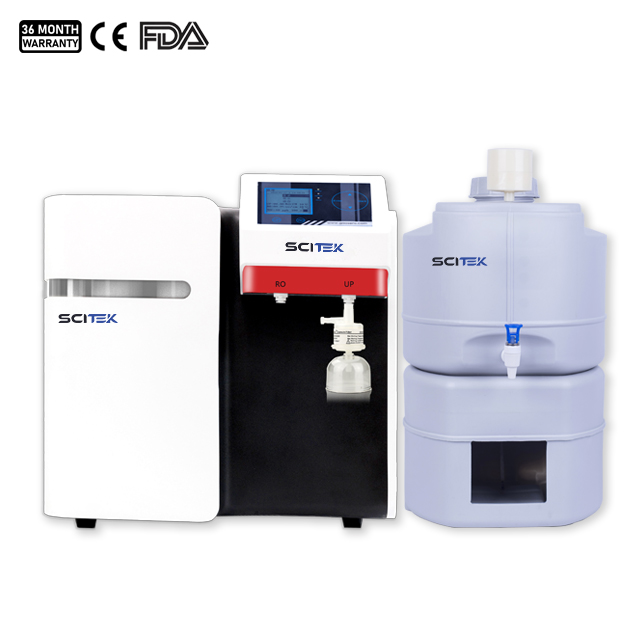
Water treatment systems are used to prepare high-purity or even ultrapure water to meet the stringent requirements of pharmaceutical manufacturing processes. Ordinary tap water contains dissolved salts, microorganisms, and organic impurities, making it unsuitable for direct use in pharmaceutical manufacturing. The pharmaceutical industry, particularly in injectable drug production, requires water for injection (WFI) that meets specific standards. Purification systems employ multi-stage filtration, reverse osmosis, deionization, and sterilization processes to remove contaminants that could pose risks to patients. This ensures water quality is safe, stable, and compliant with pharmacopoeia specifications.
Automated cleaning ensures production containers are thoroughly cleaned and ready for reuse. Clean containers prevent cross-contamination and avoid accidental mixing of different medications, thereby safeguarding patient safety.
Analytical & Measurement Instruments
Spectrophotometer
Used to determine the absorbance of samples at specific wavelengths for quantitative analysis of drug concentrations.
Microscope
Used to observe particle morphology, crystal structures, and microscopic impurities.
Balance & Scale
Used for precise weighing of raw materials, excipients, and samples.
Conclusion
In summary, a pharmaceutical laboratory relies on a wide range of analytical, testing, and environmental control equipment to ensure drug safety, efficacy, and regulatory compliance. Selecting reliable, standards-compliant equipment is essential for generating accurate data, maintaining GMP compliance, and ensuring consistent pharmaceutical product quality.
As a professional lab and medical equipment manufacturer, Scitek Global is certified by ISO 9001, ISO 13485, ISO 45001 and ISO 14001. Almost all our products are certified by ETL, CE and FDA .
Scitek Global looks forward to establishing cooperation with more distributors all over the world, and working together to create greater customer value.

 English