You are here: Home » Scitek Laboratory Solution » Featured Solutions » Instruments used in Microbiology Lab with Principle, Uses

Instruments used in Microbiology Lab with Principle, Uses

Views: 2009     Author: Yammi     Publish Time: 2026-02-09      Origin: Site

Laboratories are equipped with various instruments for studying microorganisms such as bacteria, viruses, and fungi. A sterile experimental environment and stable, controllable conditions ensure the accuracy of microbiological experiments. Let's explore the essential laboratory instruments relied upon in microbiology labs and their applications.


Sterilization Equipment


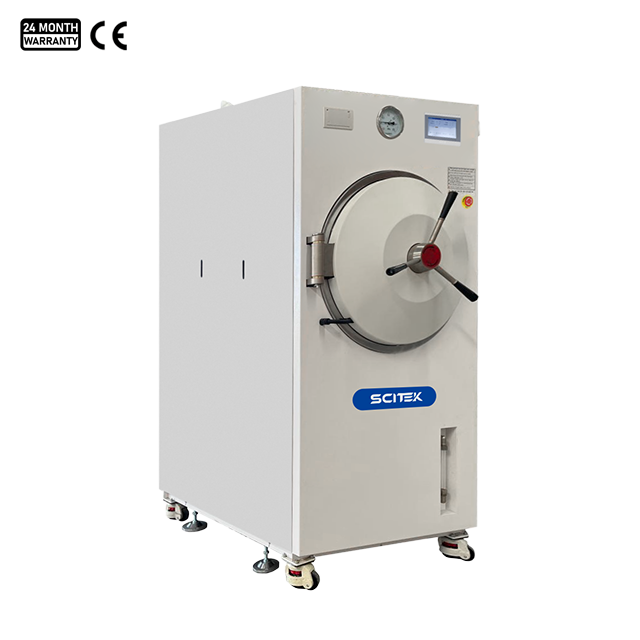
Sterilizer & Autoclave


An autoclave is an essential instrument for sterilizing equipment in microbiological experiments. Select the appropriate sterilization temperature and duration based on the size and material of the items being sterilized.

Principle: Utilizes high temperature and pressure to kill microorganisms such as bacteria and viruses, ensuring laboratory tools like petri dishes and pipettes remain free from microbial contamination that could interfere with experimental results.

Purpose: Sterilization and disinfection of laboratory equipment, capable of sterilizing large quantities of items in a single cycle. They are commonly used in laboratory applications for preparing culture media.


ST-H150 ST-H200 ST-H300 ST-H450 ST-H150PV ST-H200PV ST-H300PV ST-H450PV

Pressure Steam Autoclave

Chamber Material : SUS304

Sterilization Temperature : 105~136 ℃

Designed Temperature : 150℃

Max.Working Temperature : 136 ℃

Temp.Accuracy : 0.1℃

ST-BVH1200PV ST-BVH1500PV ST-BVH2000PV ST-BVH2500PV ST-BVH3000PV ST-BVH6000PV ST-BVH6700PV ST-BVH13600PV

Pulse Vacuum Autoclave

Chamber Material : SUS304

Jacket Design Pressure : 0.3MPa

Designed Temperature : 150℃

Max.Working Temperature : 139 ℃

Temperature Uniformity : ±0.5℃

ST-B45B ST-B45N

Class B Autoclave 45L

Chamber Material : SUS304

Sterilization Temperature : 105~136 ℃

Designed Temperature : 150℃

Max.Working Temperature : 136 ℃

Temp.Accuracy : 0.1℃


Hot Air Sterilizer


A Hot Air Oven is an electrical appliance that utilizes dry heat to sterilize medical equipment or samples. It is primarily used to sterilize materials that cannot be exposed to moisture. In microbiology laboratories, it is particularly suitable for sterilizing glass and metal equipment without causing corrosion or moisture damage.

Principle: Hot air within the oven is evenly distributed throughout the chamber by a fan. This prevents hot air from rising to the top while keeping cool air at the bottom. This ensures thorough heating of materials within the chamber. It employs electrically heated elements to generate high temperatures, typically ranging from 160°C to 180°C, which are uniformly distributed throughout the chamber via natural or forced air convection.

Applications: Hot air sterilizers can be used to sterilize materials such as glassware, metal equipment, and powders. They effectively eliminate microorganisms and bacterial spores.


ST-H25AE ST-H50AE ST-H80AE ST-H100AE ST-H180AE

Economical Hot Air Sterilizer

Circulation : Forced air convection

Range : RT+10-250 ℃

Fluctuation : ±1

Control Accuracy : 0.1℃

Uniformity : ≤ Max operating temperature±2.5%

ST-H25A ST-H50A ST-H70A ST-H100A ST-H200A

Hot Air Sterilizer

Circulation : Forced air convection

Range : RT+10-250℃

Fluctuation : ±0.5℃

Resolution : 0.1℃

Uniformity : 0.25℃


Bunsen Burner


A Bunsen burner is a gas lamp used to sterilize inoculation loops or needles. Its adjustable flame provides high temperatures suitable for aseptic procedures and sterilization.

Principle: A Bunsen burner operates on the principle of premixed gas combustion. Fuel gas (usually natural gas or LPG) mixes with air in a controlled ratio before ignition. The adjustable air inlet regulates oxygen supply, producing either a luminous yellow flame (low air) or a non-luminous blue flame (high air).

Applications: It is commonly used for sterilization, combustion, and heating processes. In medical or microbiology laboratories, it is frequently employed for sterilizing inoculation loops.


BB-I

Bunsen Burner

Noiseless burner with individual control of flame temperature and flame height.


Incubation Equipment


Incubator


An incubator provides a controlled environment for microbial growth, including conditions such as temperature, pressure, and humidity. It maintains optimal temperature and environmental conditions necessary for microbial growth, facilitating the cultivation of bacteria, fungi, and other microorganisms.

Principle: Incubators are equipped with heating and humidification systems that can adjust internal temperature and humidity according to the type of microorganisms being cultured. Some models also support regulating gas concentrations within the chamber to create anaerobic environments.

Applications: Microbial and cell culture, biochemical reaction cultivation, and pharmaceutical testing.


ICB-50BP ICB-80BP ICB-150BP ICB-250BP ICB-350BP ICB-460BP ICB-50MP ICB-80MP ICB-150MP ICB-250MP ICB-350MP ICB-460MP ICB-80THP ICB-150THP ICB-250THP ICB-350THP ICB-460THP

Constant Temperature & Humidity Incubator

Circulation Mode : Forced convection

Temp Range (℃) : 0 ~ 65

Resolution (℃) : 0.1

Humidity Rang : 30%~95%RH

Stability : ±3%RH

ICB-C40AP ICB-C80AP ICB-C150AP ICB-C190AP ICB-C240AP ICB-C500AP

CO2 Incubator

Heating Method : Air jacket

Temp. Control Range : RT+5~55℃

Temperature Fluctuation : ±0 1℃

CO2 Control Range : 0~20%

CO2 Control Accuracy : ±0.1% (infrared sensor)

ICB-3ASR

Anaerobic Incubator

Temperature Range : RT+3~60°C; 15~60°C

Temperature Stability : ≤±0.3°C

Temperature Uniformity : ≤±1°C

Display Resolution : 0.1°C


Water Bath


A water bath is a laboratory heating device that maintains samples at a constant and uniform temperature by immersing them in heated water.

Principle: A water bath operates on the principle of indirect heat transfer through water conduction and convection.

Applications:

Incubation of samples: Enzyme reactions; Serological tests

Thawing frozen samples: Serum, plasma, reagents

Warming culture media and reagents: Agar media liquefaction; Preheating solutions

Temperature-sensitive experiments: DNA/RNA procedures; Protein denaturation at controlled temperatures


SK-WB12

Thermostatic Shaking Water Bath

Display Mode : LCD

Oscillation Mode : Repeated

Drive Mode : Track drive by single shaft

Temperature Uniformity (℃) : ±0.2

Speed Range (r/min) : 20-200

Speed Accuracy (r/min) : ±1

L2PVQA~C

Low-Temperature Water Bath

Temperature Range : -5~100℃

Chamber Size : 250×200×150mm

Slot Depth : 150 mm

Pumping Flow: 4 L/min

SK-WB28

Thermostatic Shaking Water Bath

Temp. Range : RT~100℃; RT~99.9℃

Oscillation Amplitude : 20mm

Rotary Speed : 60-280rpm

Timing : 0~120min


Sample Preparation Equipment


Homogenizer


A homogenizer is a laboratory device used to mix various tissues, foods, liquids, and other substances.

Principle: When large droplets in a coarse emulsion pass through a narrow orifice under high pressure, they break down into smaller particles, forming a more uniform and stable mixture.

Applications: Used for cell disruption to obtain organelles; serves as a preparatory step before the extraction and purification of various macromolecules such as proteins, nucleic acids, and lipids.


HMG-P10

Portable Homogenizer

Range of Rotation : 5000-30000rpm

Processing Capacity : 0.2-150ml

Speed Display : Scale

Package : Aluminum suitcase

Contact Material : SS316L

HMG-D25

Digital Homogenizer

Speed Display : LCD

Speed Mode : Knob adjust

Capacity(ml) : 0.2~10000

Frequency(Hz) : 50~60

Motor Type : Brushless motor

Speed Accuracy(rpm) : ±100

HMG-BHS11 HMG-BS09 HMG-BG08

Aseptic Homogenizer

Control Mode : Microcomputer control

Parameter Storage : 8-segment combination programming

Slap Speed : 3-12 times/s

Effective Volume : 3~400ml


Centrifuge


A centrifuge is a device that separates substances of different densities within a mixed liquid using centrifugal force, such as DNA/RNA, proteins, etc.

Principle: Utilizing sedimentation, high-speed rotation forces denser particles away from the center while smaller, less dense particles move toward the center. Consequently, denser particles settle at the bottom, while less dense particles accumulate at the top.

Applications: Separating particles in suspensions. It can be used to isolate nucleic acids, organelles, blood components, isotopes, and more.


CFG-18HI CFG-T5L CFG-T5LII

Benchtop Low Speed Centrifuge

Max Speed : 6000 rpm

Max RCF : 4390 ×g

Max Capacity : 4×500 mL

Motor : AC frequency conversion motor

Speed Accuracy : ±30 rpm

CFG-18HI CFG-T5L CFG-T5LII

Benchtop High Speed Centrifuge

Max speed : 21000r/min

Max RCF : 30640×g

Max capacity : 4×750ml

Speed accuracy : ±30r/min

Noise : ≤60 dBA

CFG-DF21HR CFG-DF25HR

Refrigerated Centrifuge

Max speed : 25000r/min

Max RCF : 64800×g

Max capacity : 6×500ml

Temp. Range : -20℃~40℃

Temp. Accuracy : ±1℃

CFG-15HMI

Micro Centrifuge

Speed Range (rpm) : 200-15000

Max RCF (xg) : 21380

Speed Accuracy : ±20 rpm

Motor Brushless : DC motor

CFG-MP2-7

Microplate Centrifuge

Max Speed (rpm) : 0-3000 rpm

Max. RCF : 500 ×g

Capacity : 2 PCR plates

Display : LCD touch screen display

CFG-BB6L CFG-BB6 CFG-BB7

Blood Bag Centrifuge

Max Speed (rpm) : 6000

Max RCF (xg) : 6600

Temperature Setting (℃) : -20~+40

Max.Capacity : 1000ml×6

Speed Accuracy : ±10r/min


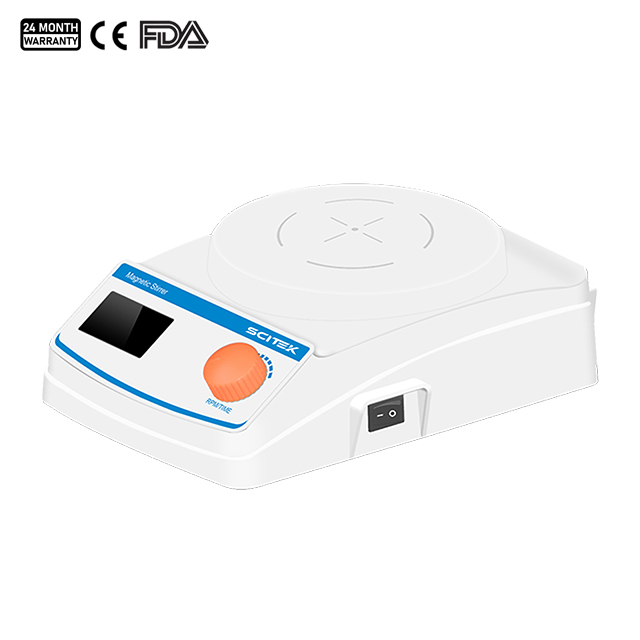
Magnetic Stirrer


A laboratory device used for mixing liquids.

Principle: Generates a rotating magnetic field using magnets, causing a metal stir bar to rotate within the container.

Application: Mixes various liquid components.


MS-5S

Mini Magnetic Stirrer

Max. stirring quantity (L) : 3

Speed range : 100-2000rpm

Work panel size (mm) : φ135

Type : Digital display type

Motor type : Brushless DC motor

Speed accuracy : ±1rpm

HMS-PT

Hotplate Magnetic Stirrer

Work Plate Material : Stainless steel cover with ceramic

Motor Type : Brushless DC motor

Max. Stirring Quantity (H2O) : 20L

Speed Range : 100-1500rpm

Resolution : ±1rpm

MMS-H4

Multi-position Magnetic Stirrer

Stirring Positions : 4

Max. Stirring Quantity of Single

Position (H2O) : 10L

Max. Magnetic Bar : 40mm

Speed Range : 200-1500rpm

Speed Display : LCD


Vortex Mixer


A fundamental technique in laboratories for mixing samples in glass tubes or flasks.

Principle: Induces reactions and achieves homogenization by agitating the mixture.

Applications: Primarily used for mixing liquid samples in test tubes, also suitable for homogenizing cells and organelles.


TMX-1500C

Thermostatic Mixer

Control Range : 0~100°C

Temp. Control Precision : ±0.3°C

Accuracy : 0.1℃

Oscillation Speed Range : 200~1500 rpm/min

Oscillation Amplitude and Mode : 2mm (Horizontal rotation)

RMX-100

Roller Mixer

Speed Range : 20~99rpm

Operation Mode : Rolling & Swinging

Amplitude : 25mm

Roller Quantity : 6

Roller Length : 280mm

Timer for Forwards/Reverse :  30sec~99min59sec

RMX-S100

Rotary Mixer

Shaking Speed : 10~100rpm (Precisely Adjustable)

Timing Range : 1min ~99h59min

Time for Pause : 1-5s

Max. load : 6kg

Mixing Method : Flip

VMX-M

Microplate Mixer

Shaking Movement : Orbital

Orbital Diameter : 4.5mm

Max. Shaking Weight (With Accessory) : 

0.5kg

Motor Type : Brushless DC motor

VMX-2000

Vortex Mixer

Range of Rotation : 1000~2800rpm

Amplitude : 3mm

Time Setting : Timing display

Run Mode : Touch operation/continuous

Motor Type : Shaded pole motor

VMX-200

Multi-tube Vortexer

Speed Range : 500~2500rpm

Amplitude : 4mm

Time Setting : 1min ~99h59min

Max Load : 4.5kg

Mixing Method : Horizontal circumference


Hot Plate


An electric heating plate generates heat through electrical current, suitable for water bath heating and heating glassware.

Principle: Electric current flows through a coil with high resistance, converting electrical energy into thermal energy.

Applications: Used for heating glassware and other components.


HSS-280S HSS-350S HSS-400S

Stainless Steel Hotplate

Max. Working Temperature (℃) : 380 (Surface temperature)

Work Plate Material : Stainless steel

HC-G550Glass Ceramic Hotplate

Control Accuracy of Work Plate : ±10°C

Safety Temperature : 580°C

Temperature Display : LED

Temperature Display Accuracy : ±1°C

d


Analytical Instruments


Analytical Balance


Equipment used to measure the weight of extremely light substances

Purpose: Weighing test materials and samples


BA-SEMA (1)

0.00001g Semi-micro Analytical Balance

Stable Time (Average) : 2.5s/6s 6s

Balance Time : 30~60min

BA-IT

0.0001g Electronic Analytical Balance

Readability(g) : 0.0001

Min Weighing(g) : 0.0004

Cal.Weight : Internal Calibration

BA-E1003X BA-E2003X BA-E3003X BA-E5003X (3)

0.001g Analytical Balance

Readability : 0.001g

Calibration : External Calibration

Optional RS232 interface and printer


pH Meter


A pH meter is a laboratory device used to measure the hydrogen ion concentration in aqueous solutions to determine their acidity or alkalinity.

Principle: Typically termed “electrolytic pH meters,” these instruments generate an electrochemical potential when an electrode-equipped bulb is immersed in a solution. Hydrogen ions in the solution exchange positive charges with the electrode, producing a pH value displayed on the screen.

Purpose: Primarily used to measure the acidity of pharmaceutical chemicals, aqueous solutions, soil, and other substances.


PH-S10P

Pocket pH Tester

Range : -2.000 - 20.000pH

Accuracy : ±0.002pH

Calibration Points : 1 to 5 points

PHO-P320

Portable pH/ORP Meter

Range : -2.000 to 20.000pH

Accuracy : ±0.002pH

Calibration Points : 1 to 5 points

PH-B400

Benchtop pH Meter

Range : -2.000~20.000pH

Accuracy : ±0.002pH

Calibration Points : Up to 5


Spectrophotometer


A spectrophotometer is an instrument used to measure the relationship between light intensity and wavelength. Quantitative analysis of solutions can be performed based on the amount of light absorbed by colored solutions.

Principle: Absorption of light at a specific wavelength is proportional to the concentration of the substance. Quantitative analysis of solutions can be conducted based on absorbance at specific wavelengths.

Applications: In microbiology laboratories, spectrophotometers measure the concentration of substances involved in nucleic acids, proteins, enzymatic reactions, and bacterial growth.

Observation Instruments


SP-UVL6S SP-UVL6S SP-VL3S SP-VL3

UV-Vis Spectrophotometer

Focal Length : 160 mm

Grating : 1200 lines/mm

Detector : Silicon Photocell

Spectrum Bandwidth : 1.8 nm

Wavelength Range : 325-1100 nm

SP-V5600 SP-V5800-3

Visible Spectrophotometer

Wavelength Range : 320-1100nm

Bandwidth : 2nm

Wavelength Accuracy : ±0.5nm

Wavelength Repeatability : ≤0.2nm

Wavelength Setting : Auto

SP-FL98

Fluorescence Spectrophotometer

Emission Wavelength : 200-900nm

Wavelength Repeatability : ≤0.2nm

Wavelength Accuracy : ±0.4nm


Microscope


A device that magnifies and observes minute particles.

Principle: Objects are magnified multiple times based on their relative position to lenses or electromagnets.

Various microscope types have been developed to meet different observation needs. However, magnification capability is their common feature.

Usage: Primarily used to observe microscopic particles invisible to the naked eye.


MSC-F201T Microscopes

Fluorescence Microscope

Optical System : Infinite optical system

Eyepiece : WF10×18mm

Objective : Infinite plan achromatic objective: 4×, 10×, 40×, 100×

Nosepiece : Quadruple Nosepiece

MSC-I403

Inverted Microscope

Viewing Head: Trinocular head inclined at 45°, interpupillary distance 50-75mm

Eyepiece : WF10X/ 20mm

MSC-MV510T

Multi-view Microscope

Optical System : Infinite optical system

Eyepiece : Extra wide field evepiece WF10X/20

Objective : Infinite plan achromatic objective 4X, 10X, 40X, 100X


Colony Counter


A colony counter estimates the density of liquid cultures by counting CFUs (colony-forming units) on agar or petri dishes.

Usage: Primarily used to count the number of colonies present on petri dishes to estimate microbial concentration in liquid cultures.


BCC-A01 BCC-A02 BCC-A03 BCC-A03H

Auto Bacterial Colony Counter

Petri Dish Range (Dia.): 60–110 mm

Light Source: Reserved or 254 nm, 366 nm, and 302 nm

Counting Area: Circle, Square, Polygon

Pixel: 6.3 million; 12 million; 20 million

BCC-2

Semi-automatic Bacterial Colony Counter

Counting Range : 0~999

Diameter of the Counting : Plate φ115mm

Magnification : 3 times (or 9 times)

BCC-S1

Automatic Colony Counter

Active Display Window Character Height : 13mm

Dish Diameter : 50~90cm

Function : Induction Pressure Counting System


Storage Equipment


Ultra Low Temperature Freezer


Principle: At extremely low temperatures, microbial growth is maximally suppressed, thereby preserving samples free from contamination.

Applications: Ultra cold freezers are used for long-term storage of various laboratory items, including food, blood samples, pharmaceuticals, and injectables, to extend their shelf life.


UFZ-86V410P (2)

Ultra Low Temperature Freezer

Sensor : PTC

Controller : Microprocessor

Temperature : -40~-86℃

Defrost : Manual

Refrigerant : R4001 (CFC Free)

UFZ-86V30

Ultra Cold Freezer

Sensor : PTC

Controller : Microprocessor

Temperature : -40~-86℃

Defrost : Manual

Refrigerant : Mixed with CFC free

UFZ-150H130

-150℃ Ultra Low Temp Freezer

Range at RT.10~32℃ : -40~-150℃

Sensor : PT100

Controller : Microprocessor

Refrigerant : Mixed-gas (CFC Free)

Defrost : Manual


Water Distiller


A water distiller is a device that purifies water through the distillation process.

Principle: Water is heated to boiling point and then condensed back into liquid form to produce pure distilled water.

Applications:

It is used to obtain distilled water required for numerous laboratory tests and for preparing culture media.


Laminar Air Flow Cabinet


A laminar flow hood is an enclosed device primarily used for processes or instruments sensitive to microbial contamination.

Principle: A sterile environment is created by HEPA filters and short-wave ultraviolet germicidal lamps to disinfect the workstation.

The laminar air purifier must be turned on 15 minutes before use to ensure thorough disinfection; the workbench should be cleaned with ethanol before and after use.

Applications

Laminar flow cabinets are commonly used for contamination-sensitive processes.

They are employed in plant tissue culture experiments and genetic transformation experiments.


LCB-V800I LCB-V1100I LCB-V1300I LCB-V1500I LCB-V1800I BSC-I-800H BSC-I-1100H BSC-I-1300H BSC-I-1500H BSC-I-1800H

Vertical Laminar Flow Cabinet

Max Opening : 300 mm

Work Surface Height : 730 mm

HEPA Filter : 1 pcs, Efficiency: > 99.995% at particle size of 0.3μm

Cleanliness Grade : ISO Class 5 (formerly Class 100)


About Company​​​​​​​

As a professional lab and medical equipment manufacturer, Scitek Global is certified by ISO 9001, ISO 13485, ISO 45001 and ISO 14001. Almost all our products are certified by ETL, CE and FDA .

Scitek Global looks forward to establishing cooperation with more distributors all over the world, and working together to create greater customer value.

Quick Links

Contact Us
Scitek Global Co.,Ltd
  No. 7000 Jingshi Road, Jinan City, Shandong Province, China
/  +86-531-82893797
  Inquiry: info@scitekglobal.com
 

9999 Bellaire Blvd Ste 505, Houston, TX 77036, United States
  +1 (915) 4126735
info@scitekglobal.net
 
Copyright © 2023 Scitek Global Co., Ltd. All rights reserved.  Sitemap  Privacy Policy