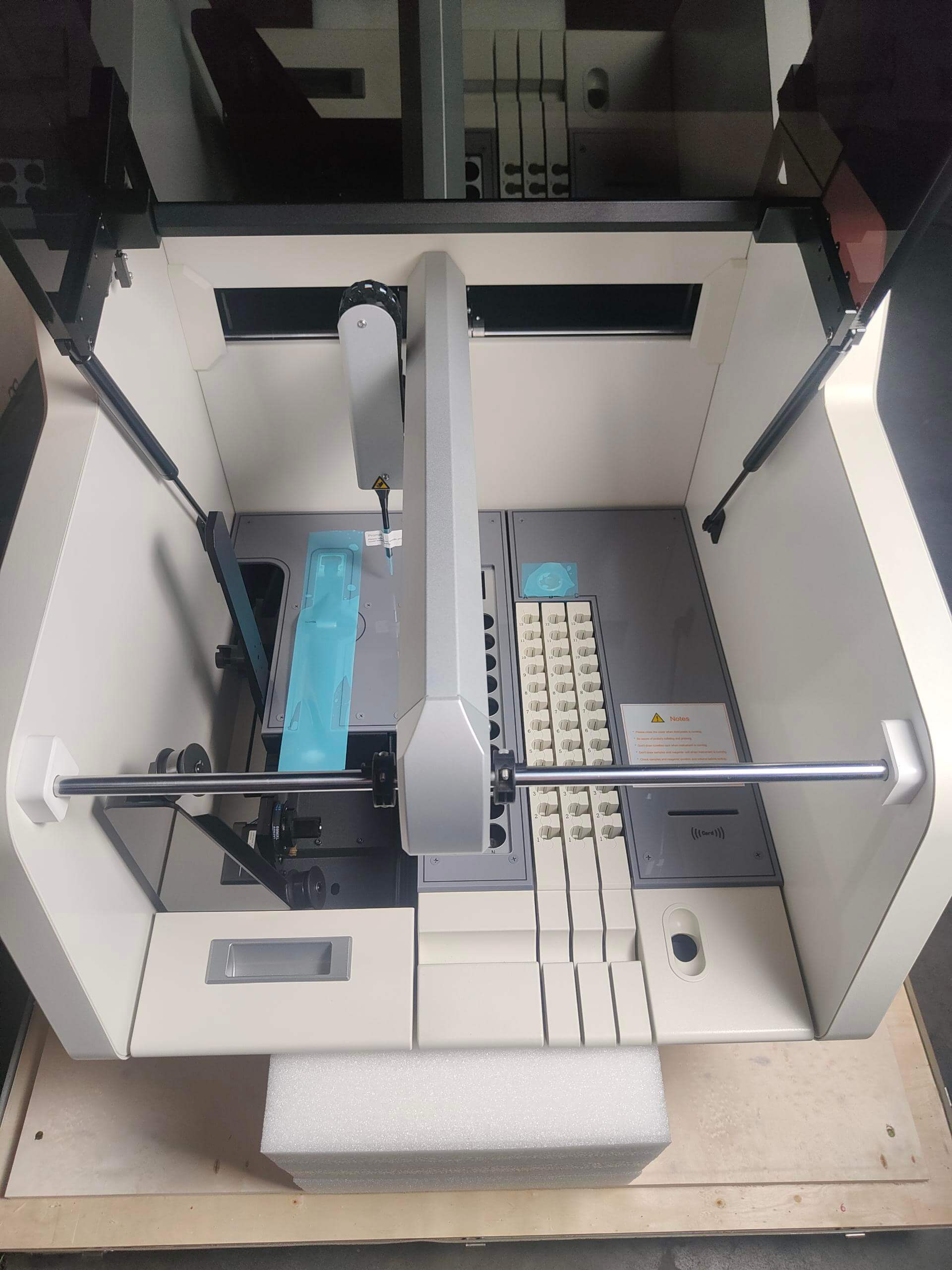
The CA-A200 automated coagulation analyzer, with its highly automated features, can handle large samples quickly and with high throughput. The CA-A200 coagulation analyzer also features an efficient sample handling system and an intelligent operator interface for easy operation and reliable results. It plays an important role in clinical diagnosis, hematology research and treatment monitoring, providing fast and accurate coagulation analysis results to help medical professionals make accurate diagnosis and treatment decisions.
Automated Coagulation Analyzer Features:
High throughput: Capable of processing multiple samples simultaneously, it has high test throughput and is suitable for large medical institutions and laboratories, etc.
Automated operation: Automatically completes the steps of sample processing, reagent addition, testing and data processing, which reduces the need for manual operation and improves the efficiency and accuracy of testing.
Data management and report generation: Data management system capable of storing and managing test results and generating detailed reports
Insufficient Alarm for Cuvettes, Reagents, Detergent
Yes
LIS System
Yes
Sizes(W×D×H)(mm)
600x620x650
Shipping Size(W×D×H)(mm)
970x950x950
N.W./G.W. (kg)
110/150
Details of Automated Coagulation Analyzer:
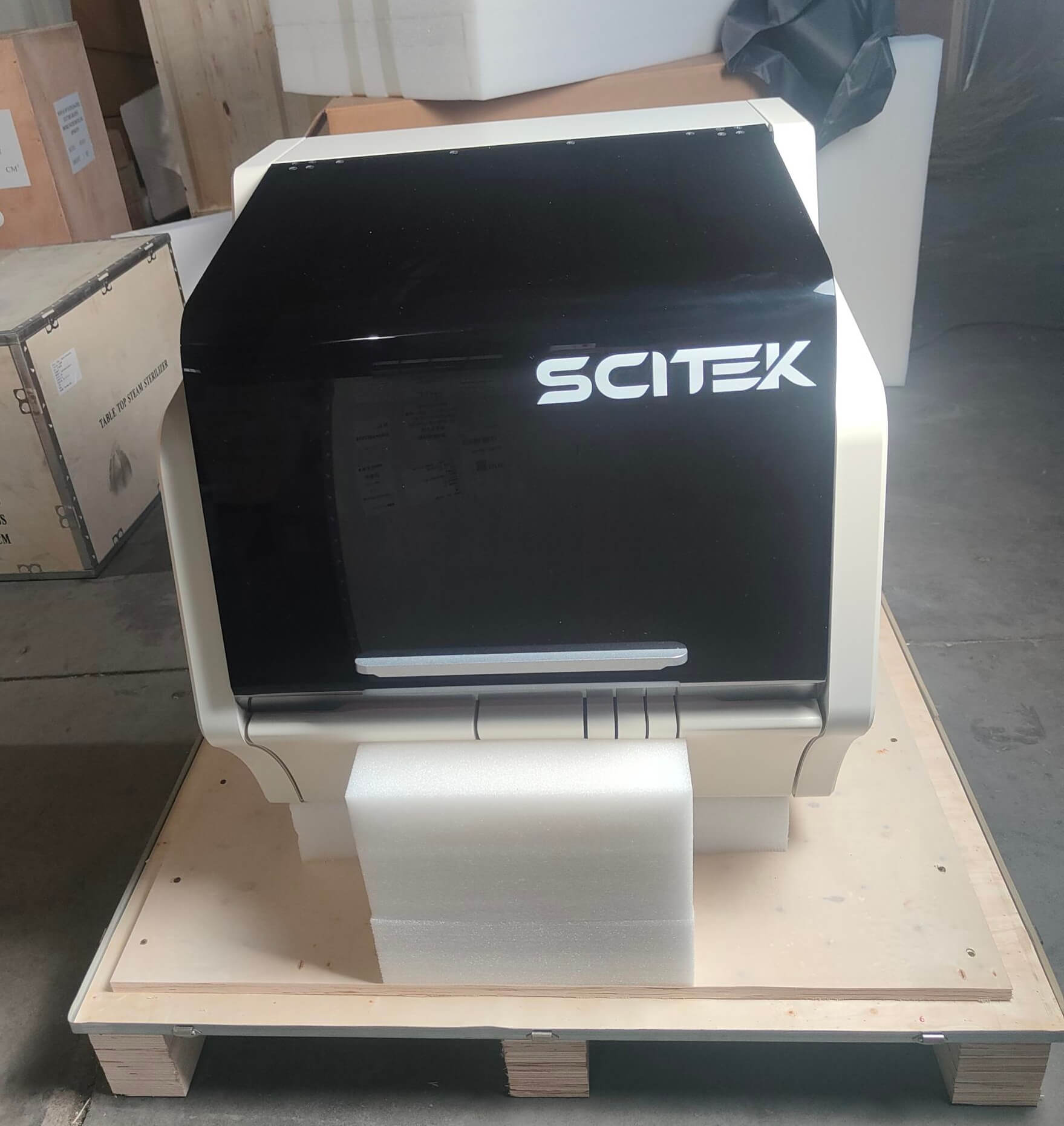
The front view shows the intuitive control panel and clearly marked buttons for efficient operation. Its sleek design is compact, saving space in the laboratory while ensuring high-throughput testing for coagulation parameters.
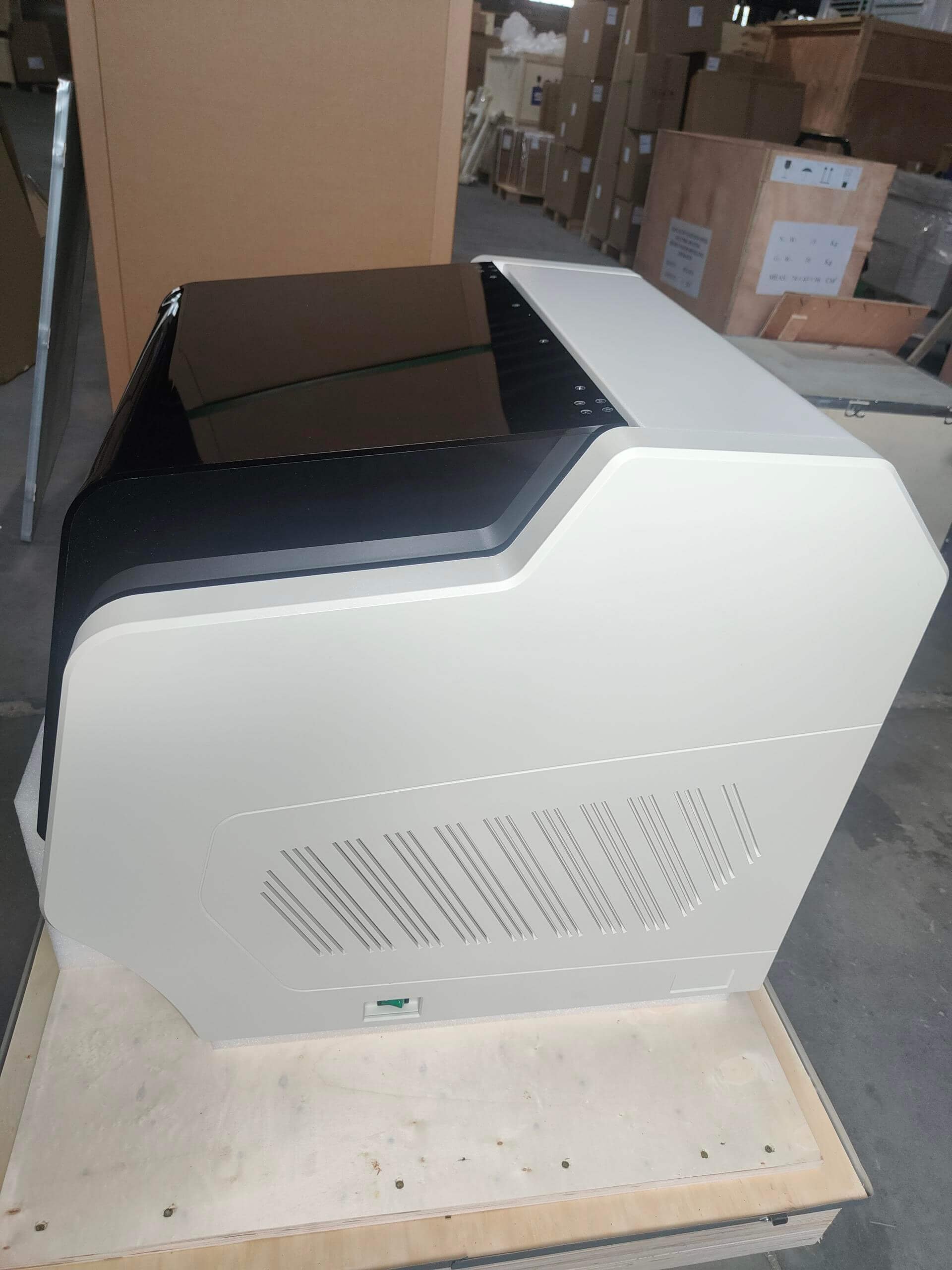
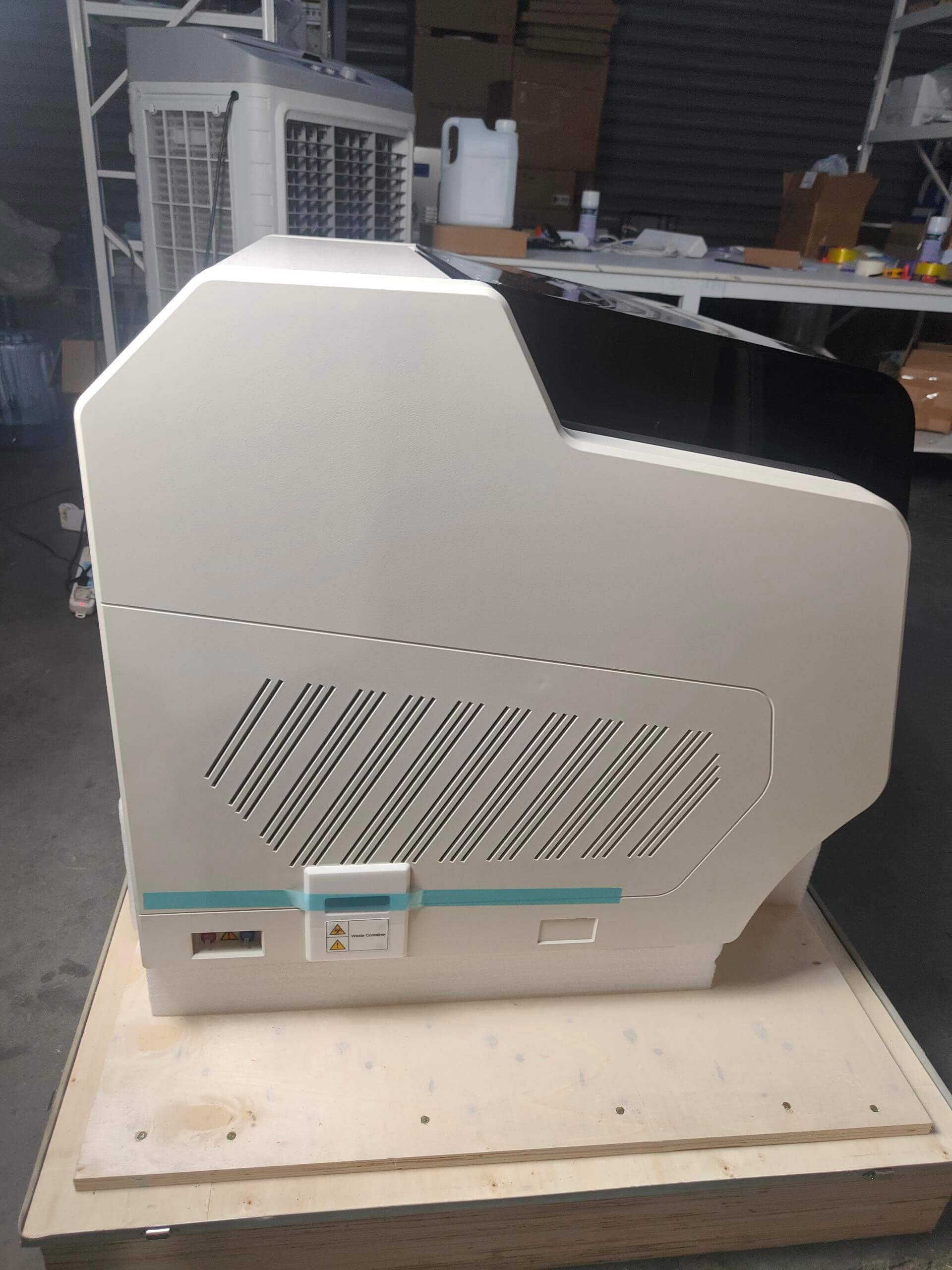
The compact size is ideal for laboratory spaces, while the side vents provide efficient airflow to maintain stable operating temperatures. The side view also highlights the ports and connections for easy integration into laboratory networks.
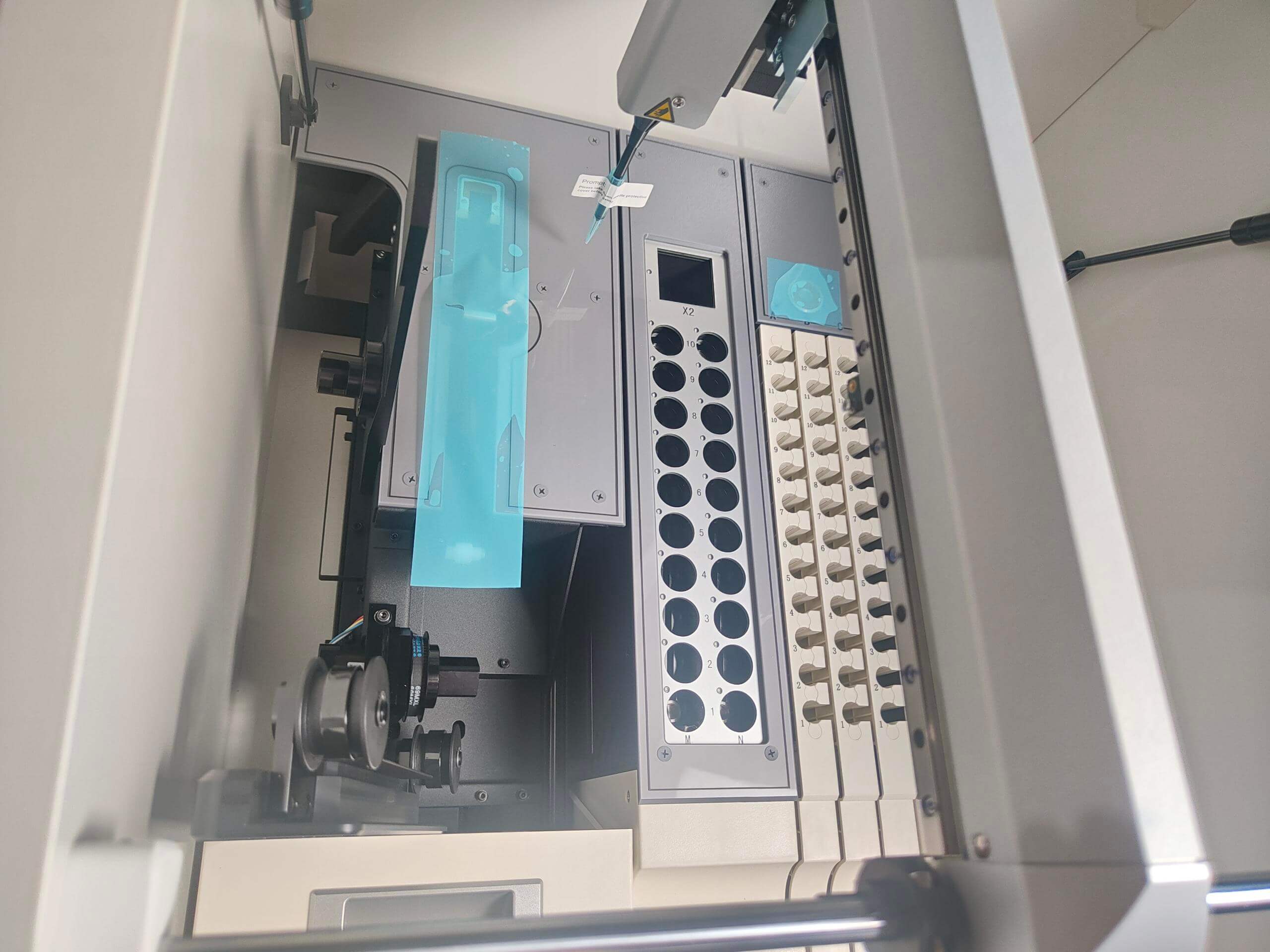
Inside the automated coag analyzer, precision components such as reagent chambers, sample trays, and sensors are clearly visible. The high-quality, durable materials used in the internal structure ensure long-lasting performance and reliability. The system’s automated processes streamline testing and reduce the chances of human error, enhancing overall accuracy and efficiency in coagulation testing.
FAQ
What is a automated coagulation analyzer?
A coagulation analyzer is a specialized in vitro diagnostic device used to assess blood coagulation function. Its primary functions include screening for coagulation disorders, evaluating the risk of bleeding or thrombosis, monitoring the efficacy of anticoagulant therapy, aiding in preoperative assessment, and assisting in the diagnosis of conditions such as hemophilia and disseminated intravascular coagulation (DIC).
It measures key coagulation parameters such as PT/INR, APTT, and D-dimer, typically using detection principles such as optical and mechanical methods. These analyzers are categorized into fully automated, semi-automated, and point-of-care rapid testing systems, and are widely used in clinical laboratory settings across medical institutions of all levels.
What is the principle of automated coagulation analyzers based on?
Fully automated coagulation analyzers commonly integrate three core detection principles:
Optical turbidimetry: Tracks changes in plasma light transmittance/scattering as fibrin clots form
Mechanical (magnetic bead) method: Detects clot formation by monitoring the oscillation amplitude change of a magnetic bead in plasma, unaffected by lipemic/hemolyzed/icteric samples
Immunoturbidimetry: Uses antigen-antibody binding reactions to quantify specific markers such as D-dimer and coagulation factors.
As a professional lab and medical equipment manufacturer, Scitek Global is certified by ISO 9001, ISO 13485, ISO 45001 and ISO 14001. Almost all our products are certified by ETL, CE and FDA .
Scitek Global looks forward to establishing cooperation with more distributors all over the world, and working together to create greater customer value.

 English