You are here:Home » Applications » Comprehensive Guide to Full Biosafety Cabinet Decontamination
Comprehensive Guide to Full Biosafety Cabinet Decontamination
Views: 728 Author: Site Editor Publish Time: 2026-07-28 Origin: Site
Beyond Maintenance: Why Proper Full Cabinet Decontamination Matters
Biosafety Cabinet (BSC) is a core piece of protective equipment for biopharmaceutical facilities, clinical testing laboratories, and high-containment biosafety laboratories. During long-term operation, the internal High-Efficiency Particulate Air (HEPA/ULPA) filters may accumulate:
● Bacteria and fungal spores;
● Virus particles;
● Biological sample aerosols;
● Contaminants generated during experimental procedures;
When a biosafety cabinet that has not undergone full cabinet decontamination is dismantled, even the slightest mechanical vibration or airflow disturbance can transform the risk of internal contamination into a risk to the open environment, instantly turning a previously safe laboratory into a high-risk contaminated zone.
Standards and Guidelines-Why Surface Disinfection Is Not Enough?
Major global biosafety standards and guidelines emphasize that appropriate and full cabinet decontaminationmust be executed at during the lifecycle of a biosafety cabinet under the following circumstances:
● Before HEPA/ULPA Filter Replacement;
● Before internal repairs or major servicing;
● Before relocation or transportation;
● Before decommissioning or disposal;
● After contamination Events or High-Risk Applications;
Traditional surface disinfection methods using liquids only address localized contact areas and cannot achieve comprehensive decontamination of the complex internal structures of biosafety cabinets. Consequently, the industry is rapidly shifting toward more scientifically rigorous space decontamination solutions: utilizing fully sealed systems to subject the cabinet's internal 3D space to gaseous decontamination. The annex to the NSF/ANSI 49 standard details the mandatory procedures for gaseous decontamination. It explicitly requires that, prior to the removal of any components capable of generating aerosol contamination (such as filters or fans), a validated gaseous decontamination method (such as hydrogen peroxide vapor or chlorine dioxide) must be employed to perform a fully enclosed, recirculating sterilization of the entire cabinet.
European standard EN 12469 (Biotechnology—Performance criteria for microbiological safety cabinets) strictly limits the exposure risk for maintenance personnel. It stipulates that no technical personnel may open the fan plenum or touch the filter surface unless it can be demonstrated that the cabinet's interior has been thoroughly decontaminated.
Space Decontamination: Distinctions Between Proven Gaseous Decontamination
Formaldehyde fumigation, a long-standing industry practice, is facing strict regulatory restrictions and rapid phase-out worldwide due to its potent carcinogenicity and high toxicity risks. With the tightening of environmental protection and occupational health standards, green gaseous decontamination technologies based on hydrogen peroxide (H2O2) and chlorine dioxide (ClO2) have emerged as core solutions for meeting modern biosafety compliance requirements.
Parameter
H2O2
ClO2
Sterilization efficiency
Excellent
Excellent
Penetration
High
High
Automation
High, enabling automated cycle control
Medium
Humidity Requirement
Requires pre-dehumidification
Requires High Humidity (70%–80%)
Material compatibility
Excellent
Moderate (corrosive to copper, carbon steel, and circuits)
Residues
Water (H₂O) & Oxygen (O₂)
Chlorinated residues / salts
Post-Cycle Cleaning
None required
Requires cleaning procedures
Residue
Low
Very Low
HEPA/ULPA Filter Impact
No damage
High humidity plus chlorine risk accelerates aging
In the new NSF/ANSI 49-2022 standard (Annex B), H2O2 decontamination is explicitly recommended and widely adopted as a standard decontamination method.
Procedure for Hydrogen Peroxide Space Decontamination
H2O2 disinfection is achieved by rapidly vaporizing ( flash vaporization) an aqueous H2O2 mixture, allowing the resulting vapor to distribute throughout the interior of the BSC. A compliant and efficient H2O2 space decontamination process adhere to the following 3-stage workflow:
Phase 1: Physical Preparation and Sealing
1. Clear the BSC's work area and wipe away any visible stains from the surfaces.
2. Physically seal the perimeter and front window of the BSC using a dedicated front window sealing panel, plastic film, airtight tape, and sealing kit.
3. Connect the generator's inlet and outlet tubing and place chemical Indicators (CI) and biological indicators (BIs) to verify the sterilization efficacy.
4. Warning Signage: Post warning signs in prominent locations.
Phase 2: Injection Cycle
1. Conditioning: Adjust the temperature, humidity, and initial VHP concentration within the BSC to meet set parameters.
2. Bio-decontamination: Maintain the H2O2 concentration within the BSC in accordance with validated process parameters (or EPA label specifications) to ensure the required contact/exposure time for sterilization is achieved.
3. Real-time Leak Monitoring: Throughout the bio-decontamination phase, technicians use high-precision sensor to inspect the sealing gaps around the BSC, ensuring that residual vaporized H2O2 concentrations in the surrounding area remain ≤ 1.0 ppm and guaranteeing safety in the operating environment.
Phase 3: Aeration and Release
1. Aeration: For ducted BSC (Class II B2BSC), the cabinet's powerful exhaust system can be activated to vent the air outdoors for natural decomposition. For non-ducted BSC (Recirculating, Class II A2 BSC), catalytic converter is used to decompose hydrogen peroxide into water and oxygen, or natural degradation can be achieved through ventilation.
2. Unsealing : Before opening the BSC , the residual VHP concentration at the front window must be re-checked < 1.0 ppm.
3. Result: Verify the color transition of the CI, while activating and incubating the exposed BI for subsequent growth reading.
SCITEK Comprehensive Decontamination and Biosafety Solution
As a manufacturer of biosafety cabinets and sterilization equipment, SCITEK provides flexible H2O2 decontamination solutions for every biosafety cabinet challenge.
To address the maintenance of your core assets, introducing SCITEK’s comprehensive hydrogen peroxide decontamination solution designed to provide maximum flexibility across different biosafety cabinet platforms and application.
Decontamination Method
Flexibility
Efficiency
Typical Application
Active Full Recirculation VHP Decontamination
★★★
★★★
Integrated cabinets requiring rapid and efficient decontamination
Complex environments or cabinets without compatible interfaces
SCITEK's solution extends beyond the maintenance of our own high-quality biosafety cabinets. It is fully compatible with all brands and models of biosafety cabinets available on the market, providing non-destructive, compliant and highly efficient sterilization procedures for laboratory assets worldwide.
What Does SCITEK’s Comprehensive Decontamination and Biosafety Solution Offer?
● Integrated Hardware
Own brand Biosafety Cabinet (BSC) and VHP Sterilizer for seamless compatibility.
BSC with Integrated VHP Decontamination Mode, One-Touch Activation
● 3 Full Decontamination Solution
Active Full Recirculation VHP Decontamination
Assisted Recirculation VHP Decontamination
Enclosed Diffusion VHP Decontamination
● One-Stop Solution
Factory-validated performance and single-point after-sales support.
Users can select the most suitable sterilization method for their specific application.
Full Biosafety Cabinet Decontamination
Support Beyond Equipment
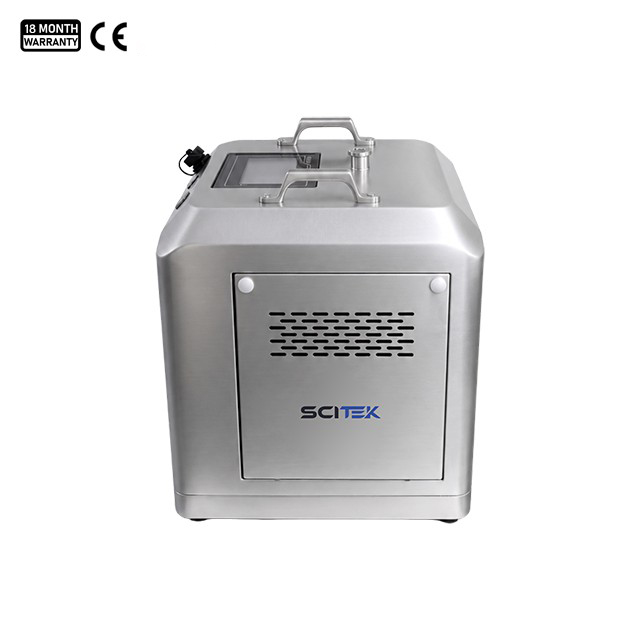
Benchtop VHP Disinfector
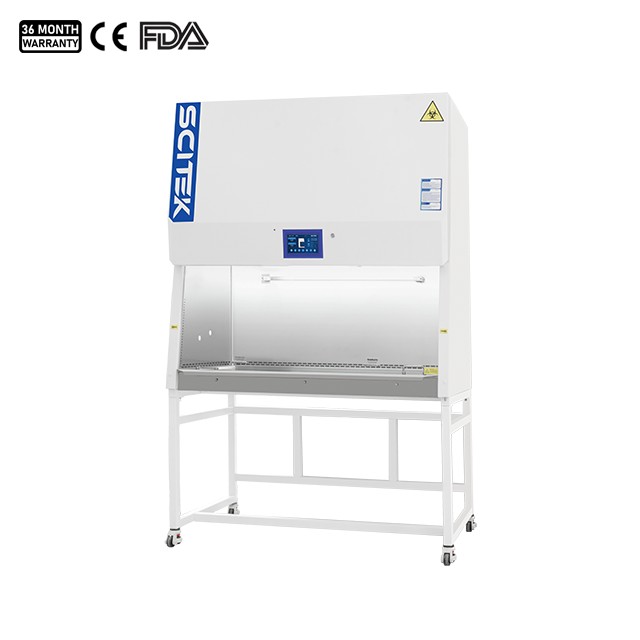
Biological Safety Cabinet
SCITEK is committed to intelligent ways to protect critical laboratory assets, reduce contamination risks, and maintain reliable biosafety performance.
SCITEK also offers global customers an OEM-standard customized fumigation port service.
In strict accordance with international standards (NSF/ANSI 49 / EN 12469) and based on customer specifications, two independent, dedicated physical ports, an inlet port and an exhaust port, are precisely machined and pre-installed on the safety cabinet prior to shipment.
SCITEK’s technical value extends beyond the mere maintenance of biosafety cabinets.
In the interconnected process chains of modern life science laboratories and pharmaceutical production facilities, microbial contamination within any single chamber can result in massive losses due to batch rejection. SCITEK offers tailored sterilization solutions and hands-on operational guidance, customized to the specific products requiring sterilization.
Simplifying Biosafety and Maximizing Asset Turnover Efficiency.
We look forward to partnering with you to define the next generation of green, compliant life science laboratories alongside SCITEK.
As a professional lab and medical equipment manufacturer, Scitek Global is certified by ISO 9001, ISO 13485, ISO 45001 and ISO 14001. Almost all our products are certified by ETL, CE and FDA .
Scitek Global looks forward to establishing cooperation with more distributors all over the world, and working together to create greater customer value.

 English