You are here:Home » Applications » How to Test Flour Quality: A Comprehensive Guide to the Alveograph
How to Test Flour Quality: A Comprehensive Guide to the Alveograph
Views: 609 Author: Yammi Publish Time: 2026-06-09 Origin: Site
The alveograph is widely used in wheat breeding, flour processing, food research and development, and the grain trade. By simulating the three-dimensional expansion behavior of dough during fermentation, it quantitatively evaluates dough toughness, extensibility, and baking strength. It provides critical data support for flour quality assessment and the production of specialty flours. This article will provide a systematic introduction to the Alveograph, covering its definition, operating principles, instrument components, usage methods, and purchasing channels.
What is an Alveograph
An alveograph is an analytical instrument specifically designed to measure the rheological properties of wheat flour dough. It evaluates dough processing quality by inflating the dough into bubbles and recording the pressure-time curve.
Parameter
Name
Unit
Description
P
Maximum Overpressure
mmH₂O
Indicates dough tenacity (elastic resistance), representing the dough's ability to resist deformation during inflation.
L
Extensibility (Curve Length at Rupture)
mm
Indicates dough extensibility, representing how far the dough can stretch before breaking.
W
Deformation Energy (Baking Strength)
10⁻⁴ J
The energy required to inflate and deform 1 g of dough until rupture, providing an overall measure of dough strength and baking performance.
P/L
Configuration Ratio
—
The ratio of tenacity to extensibility, reflecting the balance between dough strength and stretchability.
G
Swelling Index
—
A value calculated from the L parameter, indicating the dough's ability to expand during fermentation and baking.
Ie
Elasticity Index
%
The percentage ratio of the pressure measured after injecting 200 mL of air to the maximum pressure, reflecting dough elasticity.
Together, these parameters provide a comprehensive picture of the dough’s rheological properties. Generally speaking, the higher the W value, the greater the dough’s gluten strength; when the P/L ratio falls between 0.8 and 1.4, the dough achieves a good balance between elasticity and extensibility.
How the Alveograph Works
The alveograph operates based on the three-dimensional expansion of dough under a constant airflow. Its core principle is to simulate the actual behavior of dough during fermentation and baking.
First, wheat flour is mixed with a sodium chloride solution to form dough with a specific moisture content. The dough is then rolled into a circular sheet of a specified thickness. The dough sheet is placed on the base plate of the alveograph. After closing the top plate, a constant airflow is introduced from below to inflate the sheet, causing it to expand and form bubbles (alveoli) until they rupture. Throughout the process, the instrument continuously records the changes in internal pressure of the alveoli over time, generating an alveogram.
How to Operate the Alveograph
The alveograph must be used in strict accordance with standard operating procedures to ensure the accuracy and reproducibility of test results. The testing procedure is as follows:
Sample Preparation: Take approximately 250 g of wheat flour sample and determine its moisture content.
Reagent Preparation: Prepare a 2.5% sodium chloride solution (dissolve 25g of NaCl in water and dilute to 1000mL). Use at a temperature of 20 ± 2°C; the solution should be used within 15 days.
Preheating: Turn on the bubble blower to bring the dough mixer and bubble blower to the set temperatures (dough mixer 24°C, bubble blower 25°C).
Airflow Calibration: Before each use, calibrate the bubble blower’s airflow to 96 ± 2 L/h.
Based on the sample’s moisture content, calculate and measure the required volume of 2.5% sodium chloride solution, add it to the mixing bowl, then add 250 g of flour, and start the dough mixer to knead until a standard dough is formed.
Remove the kneaded dough, let it rest in the proofing cabinet for the specified time, then use the sheeting device to roll the dough into a circular sheet of the specified thickness.
Place the rolled dough sheet on a proofing tray coated with liquid paraffin and place it in a constant-temperature proofing cabinet (25°C) to proof.
Bubble test: Transfer the proofed dough sheet to the base plate of the bubble tester, close the top plate to seal it, and start the bubble test program. The bubble tester inflates the dough from below with a constant airflow, causing the dough sheet to gradually expand and form a bubble until it bursts.
Data Recording: The bubble-blowing machine automatically records the pressure change curve throughout the entire process and calculates parameters such as P, L, W, P/L, G, and Ie.
Cleaning: After testing is complete, promptly clean components such as the mixing bowl, mixing paddle, and proofing tray to prevent residual dough from affecting subsequent tests.
Components of an Alveograph
A typical Alveograph consists primarily of the following three major components:
Dough Mixer: The dough mixer is used to combine flour with a sodium chloride solution and knead it into a standard dough. It is equipped with a temperature control system to ensure consistent temperature during dough preparation. The design of the mixing blades ensures that the dough is mixed uniformly, forming a gluten network structure that meets testing requirements.
Sheeting and Cutting Device: The prepared dough is sheeted and then cut into circular specimens of specified size and thickness to ensure the repeatability and comparability of test results.
Bubble Blower: The bubble blower is the core component of the instrument, responsible for blowing bubbles into the prepared dough sheet.
Interpreting Bubble Blower Test Results
Bubble blowing parameters can be used to evaluate quality in the following areas:
High-gluten wheat flour: High W value (typically > 250), P/L ratio between 0.8 and 1.4
Medium-gluten wheat flour: Moderate W value (180–220), moderate P/L
Low-gluten wheat flour: Low W value (< 120), relatively low P/L
Precautions for Use
Laboratory temperature should be maintained between 18–22°C, with relative humidity between 50–75%
Do not open the mixing bowl lid without first pressing the “Stop” button
Strictly control the proofing time of the dough sheet; excessive or insufficient proofing will affect test results
Perform regular instrument maintenance, including daily calibration, weekly inspections, and annual servicing
How to Choose: Purchasing the Alveograph AL-E from Scitek
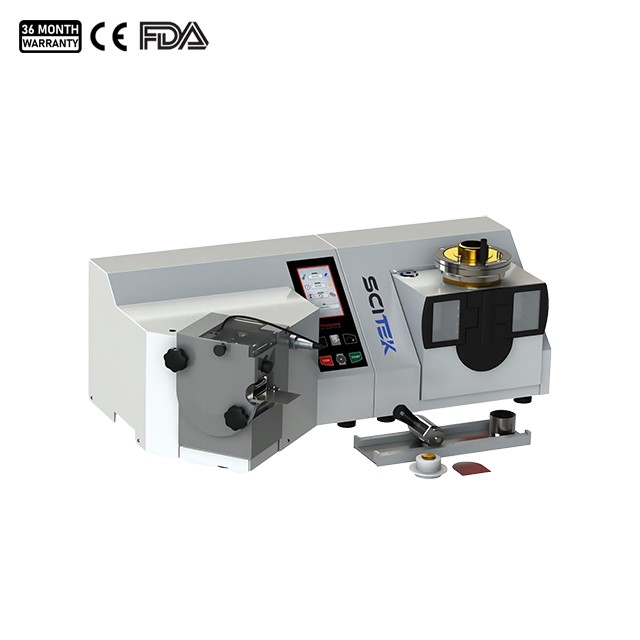
When selecting a bubble-blowing instrument, it is essential to consider a range of factors, including testing requirements, budget, instrument performance, and after-sales service. For users seeking excellent value for money, the Alveograph AL-E model from Scitek is a worthy option to consider.
Scitek is a professional supplier of analytical instruments, and its Alveograph AL-E is an economical bubble-blowing instrument. Designed specifically for testing the rheological properties of wheat flour dough, it is suitable for applications such as wheat breeding, flour processing, and quality control.
Measurement Range : Wheat Flour
Sample Volume : 250g
Stirrer Speed : 60±2 rpm
Bubble Airflow Velocity(L/h) : 96±2
Alveograph AL-E Features:
Utilizes electronic detection technology to monitor changes in tension during the dough bubbling process in real time.
High testing accuracy and high detection efficiency.
Employs electronic data acquisition, enabling fast and accurate data retrieval via USB communication for convenient and efficient testing.
Equipped with dedicated data analysis software featuring a modern, clean, and intuitive interface that is user-friendly.
Automatically analyzes data and prints test results, supporting traceability management of data.
Features a PLC-controlled temperature system with high temperature control accuracy, ensuring stable testing conditions.
Applications of the Alveograph
The Alveograph has a wide range of applications in the following fields:
Wheat Breeding for Quality: Breeders can quickly assess the dough strength of different lines, providing quantitative data to support the selection and breeding of high-quality varieties.
Flour Milling: Flour mills use the Alveograph to evaluate the quality of raw wheat, optimize wheat blending and flour formulation, and control the quality of finished flour. By analyzing bubble formation parameters, the blending ratios of different wheat batches can be precisely adjusted to ensure the stability and consistency of flour quality.
Food R&D: Baking and pasta processing companies use the Alveograph to evaluate the suitability of specialty flours. Bubble formation parameters provide a scientific basis for the development and customization of specialty flours.
Grain Trade: In the international trade of wheat and flour, bubble formation parameters have become an important reference indicator for quality evaluation and pricing.
Conclusion
As a vital tool for dough rheology testing, the Alveograph plays an irreplaceable role throughout the entire wheat industry chain. From variety breeding to flour processing, and from food research and development to international trade, the bubble-blowing parameters provide a scientific and reliable method for the quantitative evaluation of wheat quality.
For users considering the purchase of a bubble-blowing instrument, Scitek’s Alveograph AL-E offers a choice that combines performance and value. We recommend thoroughly assessing your testing needs, sample volume, and budget before making a purchase to select the most suitable instrument model and configuration.
As a professional lab and medical equipment manufacturer, Scitek Global is certified by ISO 9001, ISO 13485, ISO 45001 and ISO 14001. Almost all our products are certified by ETL, CE and FDA .
Scitek Global looks forward to establishing cooperation with more distributors all over the world, and working together to create greater customer value.

 English